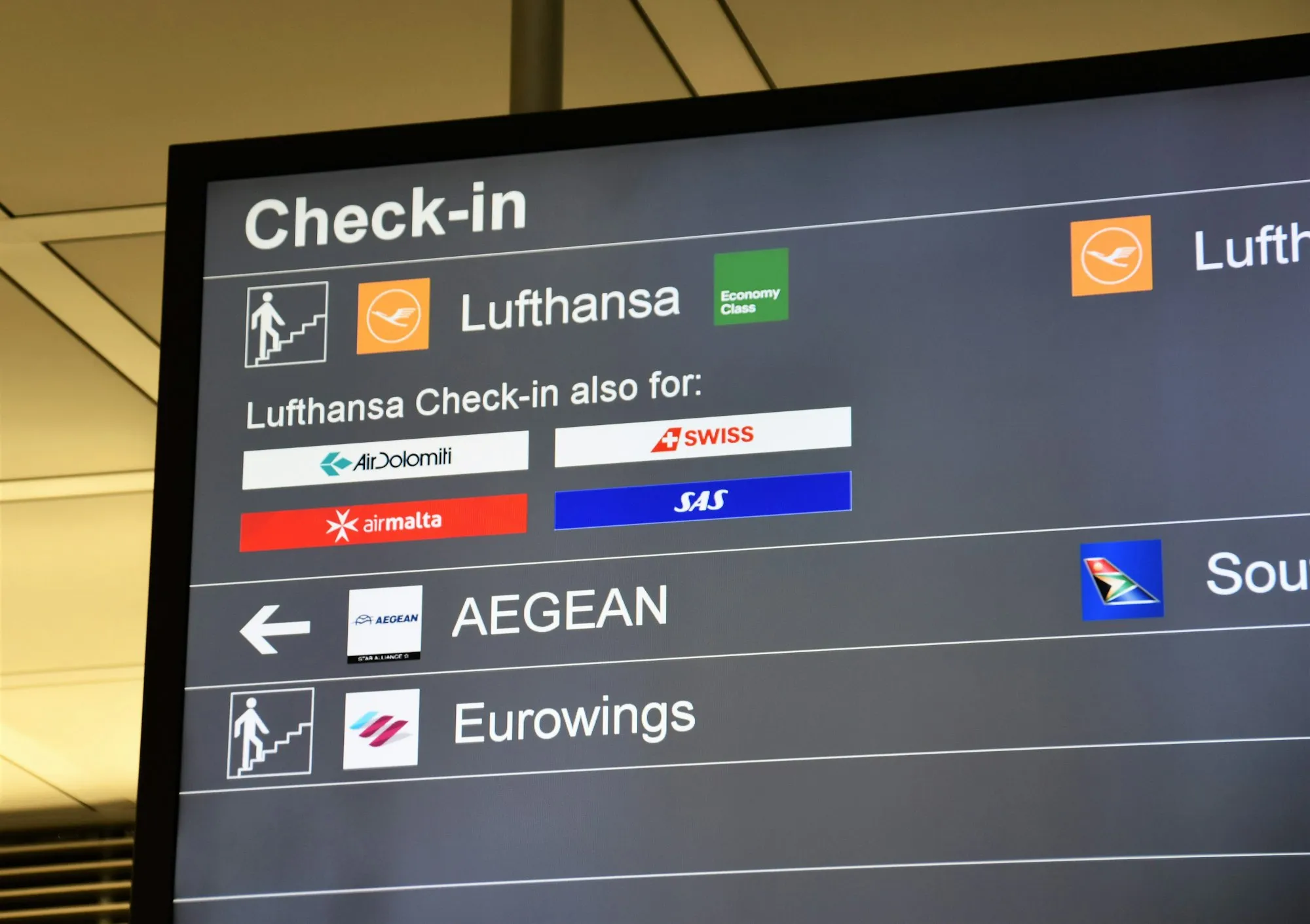
Walk up to a Lufthansa check-in desk in Munich and the screen will tell you it also handles SWISS, SAS and a couple of airlines you’ve never thought about. That screen is the entire alliance system in one image: airlines agreeing to behave, operationally, like one airline.
For points people, that agreement has a consequence the airlines don’t advertise: every alliance seat is for sale in a dozen different currencies at a dozen different prices. The airline flying you is one decision. The program booking you is a separate one, and that second decision is where all the value hides.
The three families
Star Alliance is the big one: United, Air Canada, Lufthansa, Singapore, ANA, EVA, Thai, Turkish and more. Big matters, because more partners means more award seats reachable with one currency. It’s why Aeroplan is the program I lean on hardest. One balance books EVA across the Pacific, Thai first class within Asia, and Singapore’s Frankfurt–JFK run, all off one published chart.
oneworld is smaller and more premium-heavy: American, British Airways, Qatar, Cathay Pacific, Japan Airlines, Qantas. Pound for pound it has the best business-class hardware in the sky (Qsuite has few rivals), and its currencies cross-book each other constantly: AAdvantage miles on Qatar, Qantas points on JAL and Cathay, Avios on everything short-haul.
SkyTeam is Delta, Air France–KLM, Korean Air and friends. It gets the least respect and quietly funds two of my most-used plays, Flying Blue’s monthly Europe sales and the partner awards that redeem Delta SkyMiles from their own reputation. Think Garuda, Vietnam Airlines, and the South America–Europe corridor on Air France metal.
And then there’s the free-agent tier. Emirates and Etihad belong to no alliance and partner à la carte instead, which is exactly why Etihad’s Apartments end up bookable through American’s program at a price Etihad itself would never quote you.
The rule that makes alliances useful
Because any member program can book any member airline, the question is never “which airline,” it’s “which program prices this seat best.”
The same EVA business seat to Taipei exists in EVA’s own program, in Aeroplan’s chart, in United’s dynamic pricing, and in half a dozen others, at genuinely different prices, with different taxes, different change rules and different availability. The seat doesn’t change. The bill does.
So the working method, every time:
- Find the seat on any airline in the family.
- List the programs in that alliance your Chase or Amex points can reach.
- Price the same seat in each, taxes included.
- Book through the cheapest door. It is very rarely the operating airline’s own program.
What alliances won’t do for you
They won’t share their best rooms. Airlines routinely hold first class (and sometimes their newest business product) back from partners entirely, or release it in slivers. That’s why some seats are only realistically bookable through the airline’s own program, and why the generalization “you can’t book X with partners” is sometimes true, sometimes expensively wrong.
They also won’t stop the ground shifting. Members join, members leave, and partner charts get repriced without your consent; Aeroplan’s June refresh is the recent case in point.
The alliance is the map, not the treasure. But you can’t find the treasure without it.